
Can mold return after remediation?
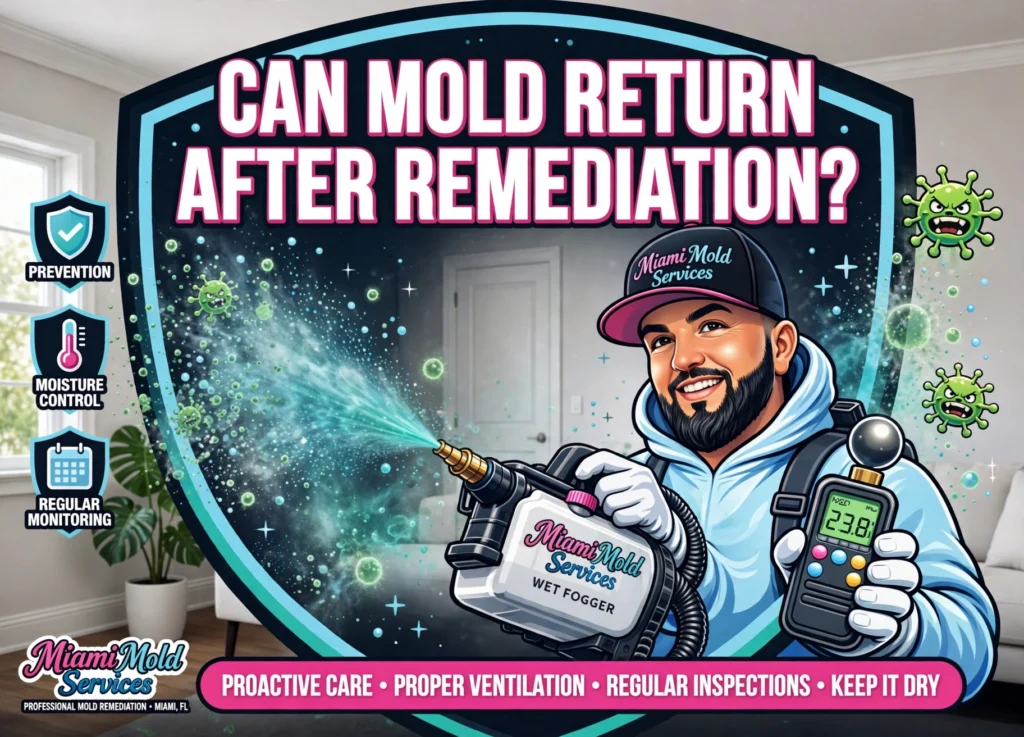
Yes, mold can return even after its proper remediation. If the underlying source of moisture is not handled properly and hidden moisture is left behind, mold can return even after remediation. Mold remediation is the process of mold removal and cleaning the area properly. However, the results depend on various factors such as repaired leaks, indoor humidity level, and drying wet materials.
Mold spores are present in all indoor environments naturally. If they land on moist materials in humid conditions, they start becoming an environmental issue. So, an effective remediation plan should only focus on mold removal, but also make precautionary measures to maintain moisture levels and control the growth of mold. Another important task is to identify the source of moisture and correct it.
Mold issues are frequent because Miami has a humid and warm climate. Moisture can be sourced by window openings, humidity, plumbing, roof leaks, hurricanes, excessive rain, or HVAC condensation.
Reasons of recurrent mold after remediation
Uncorrected moisture source
If the moisture source is not handled properly during remediation, it becomes the great cause of mold recurrence. Moisture will continue feeding mold if the sources are not stopped. For example, if a ceiling is cleaned properly by removing mold without correcting the roof leak, it will lead to mold recurrence.
Moisture that was overlooked
If the materials are dried but they have hidden moisture inside, it will cause mold development again because of damp structure. To dry out the materials from inside, it is essential to use moisture meters, hygrometers, and other tools to identify the levels of moisture in a particular area or material.
Indoor humidity is extreme
If there is no active leak but humidity levels are high, condensation can cause moisture buildup in ceilings, vents, HVACs, or windows. High humidity levels are mostly reported in bathrooms, laundry areas, closets, kitchens, and areas where ventilation is not maintained. You must maintain humidity levels and appropriate airflow to prevent mold.
Moist or damaged materials
Porous materials such as ceiling tiles, carpeting, fabrics, drywall, or particleboard can catch mold more easily. If these materials are not properly dried during remediation, they can retain moisture and feed mold to grow. These materials must be cleaned properly or discarded according to their condition.
Recent water damage
If the remediation process was successful, a new water damage can create suitable conditions for mold recurrence. This doesn’t always mean that the mold is caused by failed remediation.
Incomplete remediation process
If the remediation process was not performed with expertise, there may be some affected areas ignored or containment was not sufficient. Mold mostly comes again if only visible mold was removed and hidden mold was overlooked.
Signs of recurrent mold
After a mold remediation, always consider the signs of:
- Soft or swollen drywall
- A constant moldy smell
- Condensation
- Peeling or bubbly paint
- Water stains
- Warped floor, loose tiles, or peeling paint
- Mold appearing at the same location
- Excessive moisture after storms, rain, or HVAC
- Discolored ceilings, grout, baseboards, caulk, or walls
Always investigate the source of moisture if you notice any of these signs.
How to avoid recurrent mold?
Dry water damage promptly
If your property faces any leaks, appliance failure, or flood damage, dry affected materials as soon as possible to prevent moisture damage. Get your flooring, drywall, and insulation evaluated to identify if they are dried properly.
Fix leaks
Leaks from windows, roofs, alliances, or plumbing should be corrected promptly so that it may lead to moisture accumulation.
Humidity maintenance
If you face indoor humidity, you must use dehumidifiers and air conditions with proper ventilation. Also use exhaust fans in areas such as the laundry room, basement, bathrooms, and kitchens.
Maintain HVAC
If your HVAC has some issues regarding drain lines clog, duct sweat, poor airflow, or condensate pans overflow, it should be evaluated and corrected before it causes moisture buildup.
Inspection after heavy rains or storms
After heavy rains or storms, it is essential to get your walls, attics, roofs, ceilings, and windows inspected for water intrusion causing mold development.
Regular maintenance
Maintain moisture prone areas regularly. Use bathroom exhaust fans, repair loos tiles, cracked grout, leaks, or damaged caulk immediately.
Is mold remediation permanent?
If mold remediation is performed by a professional expert and moisture source is corrected effectively, mold remediation will provide long-lasting outcomes. Yet, no remediation process can guarantee permanent results as mols may come again if it finds suitable moisture conditions.
A good remediation process means proper cleanup of mold, moisture source removal, drying the property properly, and preventing conditions that lead to mold development.
Post-remediation evaluation
Once the remediation process is completed, post-remediation inspection helps to confirm the process was done with absolute professionalism. The work area must be dried, cleaned, and restored effectively. If the project was large, mold testing, insurance requirements, scope of remediation are also considered.
Prevention of mold in Miami
Miami faces year-round moisture challenges in commercial and residential properties. Mold prevention is very important to keep your property mold free. Regular maintenance such as plumbing issues, humidity, AC systems, window seals, roof maintenance, and water intrusion must be handled quickly. Inspections after water or fire damage, leaks, or excess humidity can also prevent mold.
FAQs
How soon can mold come again after remediation?
Mold can come again if there is a new leak or moisture issue. Properly corrected moisture source and cleaning of affected materials during a remediation can prevent mold.
Does mold always return after remediation?
No, if the moisture source is handled properly and moisture levels are maintained in indoor environments, mold can be prevented.
Can mold develop behind a drywall?
If plumbing leaks are not corrected, mold will appear again in drywall. You must inspect hidden moisture to avoid mold recurrence.
Can I paint on mold?
If the moisture source is not handled and painting is done on mold or water stains, mold will probably come again. After proper remediation and moisture source correction, you may use a primer and paint the area.
What to do if mold is back?
If mold is coming again, you must treat the underlying source instead of cleaning only visible mold. A professional expert can inspect the area to find out the source of moisture and recommend essential repairs or drying.
Contact us for mold services in Miami
If you notice recurrent mold after a remediation process, you can call a professional for a complete assessment and restoration process.
We are offering all types of mold services in Miami including mold inspection, remediation, and prevention. Call us and book your appointment now.

Michael Anthony
Author Profile: Owner & Certified Mold Remediation Specialist
Michael Anthony is a certified mold inspector, assessor, and remediator serving Miami and all nearby areas. He has years of hands-on experience in mold damage restoration across residential and commercial properties. His work helps homeowners and businesses throughout the region protect their properties from mold damage and maintain healthier indoor environments.
- (305) 401-3606